
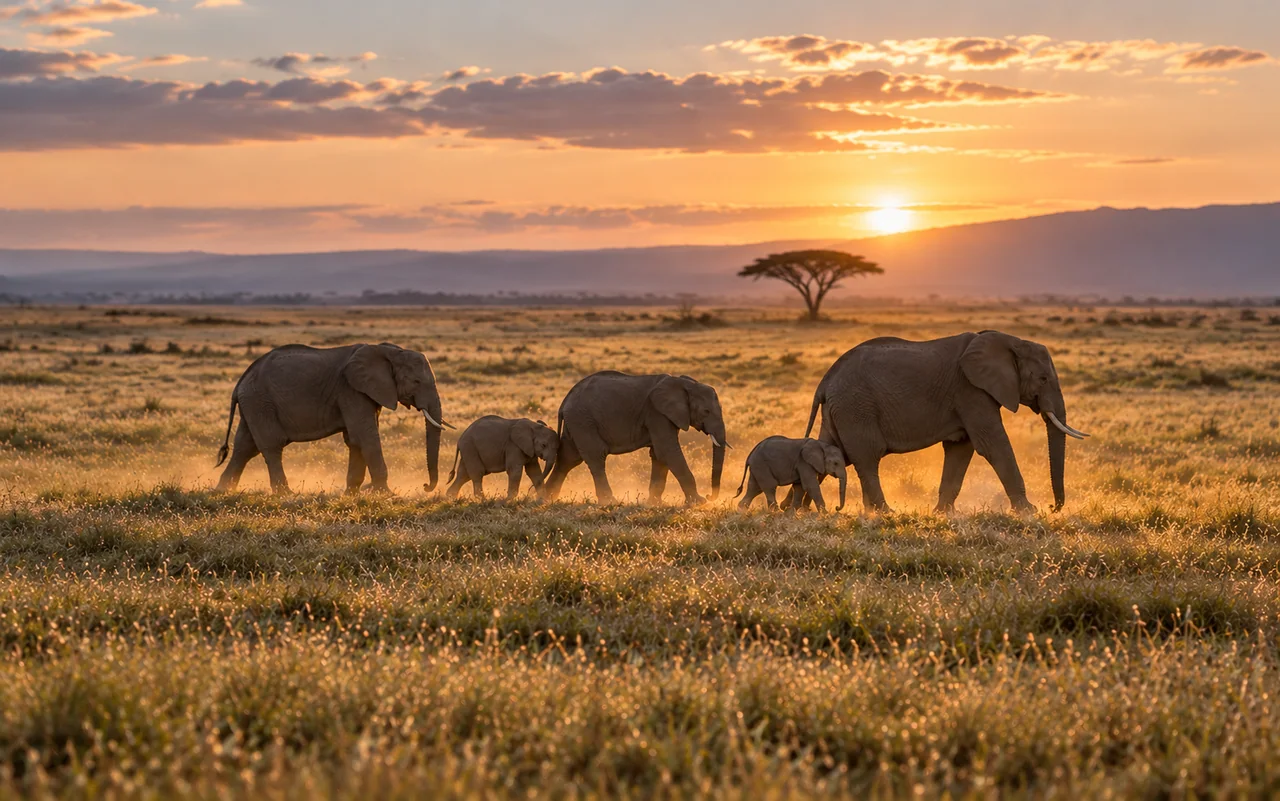
Safari is one of the most talked-about, least-explained kinds of travel. Here is what actually happens.
A typical safari day starts early — often before sunrise, when animals are most active and the light is at its best. A morning game drive, a break through the heat of midday, and an afternoon or evening drive is the usual rhythm, though camps vary in how strictly they hold to it.
Camps range enormously: a permanent lodge with a pool and full service, a tented camp with canvas walls and paraffin lanterns, or a fully mobile camp that moves with the seasons. None is objectively better — the right one depends on how much comfort matters against how immersive you want the setting to feel.
Wildlife sightings are never guaranteed, and we would rather say that plainly than imply otherwise. Guides read tracks, radio calls and seasonal patterns to maximise the odds, but the wild does not run on a schedule. The privilege is being a guest in it, not a customer owed a checklist.
Timing shapes the experience more than most first-time safari travellers expect. Dry season generally means easier wildlife viewing as animals gather near water; green season brings dramatic landscapes, fewer crowds and newborn animals, at some cost to visibility. Neither is wrong — they are simply different trips.
Between drives, the pace is genuinely slow: reading, resting, watching the camp’s waterhole or simply sitting with the quiet. A good safari itinerary leaves room for that stillness rather than filling every hour, because a lot of what people remember afterwards happens in the gaps.